You won’t believe how many strawberries you’ll get… with just one from the market!
You Won’t Believe How Many Strawberries You’ll Get… with Just One from the Market!
Introduction
Growing your own strawberries at home can be incredibly rewarding, especially when you start with just one market-bought fruit. Imagine the fresh, juicy strawberries you can enjoy in your garden with very little effort! Let’s dive into how you can start your own strawberry patch using simple, actionable steps.
How to Extract Strawberry Seeds
Begin by collecting strawberry seeds from a fresh fruit. The most effective method is cutting a strawberry into small pieces. Let them dry, then gently scrape off the seeds. This approach is both simple and biologically friendly.
- Ensure the seeds are as clean as possible. This ensures successful germination.
- Add water until the container is half full.
- Use a hand blender to mix gently, ensuring you don’t break the seeds.
- Allow the seeds to settle at the bottom.
After a few minutes, remove the pulp carefully. Rinse the seeds to wash away remaining pulp and sugars that might promote mold growth during planting. Finally, spread the seeds out to dry completely in a plastic container.
How to Plant Strawberries at Home
Once dried, your seeds are ready for planting. Opt for perforated plastic trays and use a substrate rich in organic matter, like a mix of potting soil and compost. This mix retains moisture, crucial for seedling development.
- Add 4 to 5 cm of substrate to your trays.
- Use the “wet chamber” method by covering the substrate with a bag to trap moisture.
- Tamp the substrate lightly with another tray for even distribution.
- Sprinkle seeds superficially, two to three per section.
Caring for Young Strawberry Plants
Maintain a humid environment by covering with plastic wrap. Regularly check moisture levels, especially as seed germination can be staggered. Water lightly to keep the substrate moist.
As seedlings develop their first true leaves, uncover them to strengthen, but increase watering as many seeds are still germinating. Place them in a partially shaded area with gentle morning or afternoon light.
Identifying and Transplanting Strawberry Plants
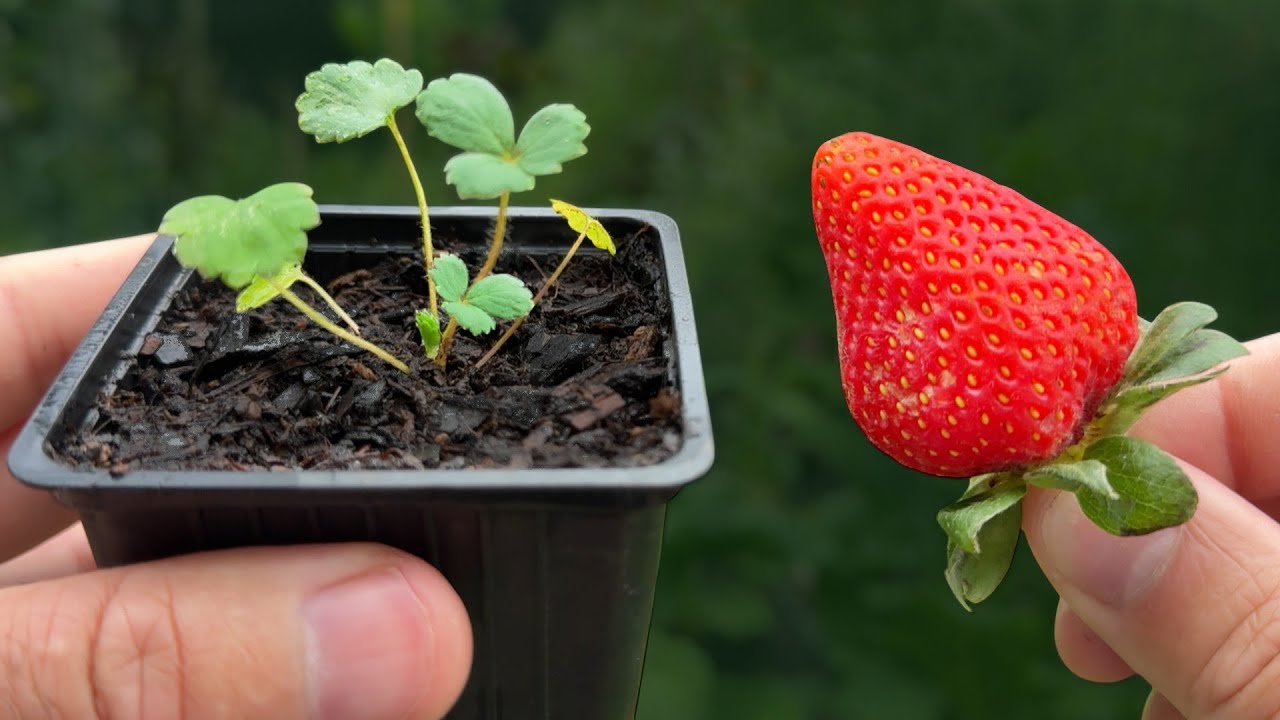
Identify new strawberry plants by their two round cotyledons, followed by true leaves with three distinct lobes. As plants grow, ready them for transplantation.
- Look for well-developed plants, even if leaves aren’t fully lobed yet.
- Transplant by maintaining collar height, where new leaves sprout.
- Firmly press the substrate around the plant roots for stability.
- Use a soil mix with dark soil, wood chips, or coconut fiber for better rooting.
Conclusion
With these easy steps, you can transform one market strawberry into a thriving garden. Remember, consistency in care is key. Start today, and soon you’ll be enjoying your own bountiful harvest of delicious strawberries! Don’t wait—gather your supplies and get growing!